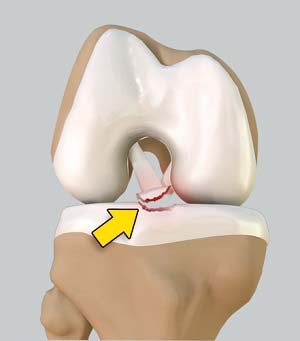
What are Tibial Eminence Fractures?
The tibia or shin bone is a major bone of the leg which connects the knee to the ankle. A fracture or break in the upper part of the tibia is known as a proximal tibial fracture and commonly occurs just below the knee joint.
The knee joint is the largest weight-bearing joint of the body, where the lower end of the femur or thigh bone articulates with the tibial plateau. The upper fourth of the tibia constitutes the proximal part and is composed of cancellous bone. By nature, cancellous bone easily undergoes compression and depression, following an injury. So the proximal tibia is at high risk for injury. A fracture in the proximal tibia may or may not affect the knee joint but the surrounding soft tissues, as well as the nerve and blood vessels, may be affected. A fracture in the top of the shin bone or tibial plateau, involving the articular cartilage surface of the knee joint, may develop chronic arthritis.
What are the Causes of Tibial Eminence Fractures?
A fracture of the proximal tibia may be caused by stress or trauma or secondary to weakening of the bone due to cancer or infection. High energy injuries such as a fall from a height, sports-related trauma or motor vehicle accidents may be responsible for fracture in young adults. Sometimes even low energy injuries such as falling from a standing position may result in a fracture of the proximal tibia in elderly individuals.
What are the Symptoms of Tibial Eminence Fractures?
The symptoms of proximal tibia fracture include painful weight-bearing movements, tenseness around the knee, limitation of movement and deformity around the knee. In some individuals, impairment of blood supply secondary to the fracture may result in a pale or cool foot. Patients may also experience numbness or feelings of ‘pins and needles’ in the foot as a result of associated nerve injury.
How are Tibial Eminence Fractures Diagnosed?
The diagnosis of a proximal tibia fracture is based on the medical history including history of any previous injuries, complete physical examination and imaging studies. The physician will evaluate soft tissue around the joint to identify any signs of nerve or blood vessel injury. Multiple X-rays and other imaging studies such as CT and MRI scans may be used to identify the location and severity of the fracture.
How are Tibial Eminence Fractures Managed?
The management of the fracture is based on the severity of the fracture, the medical condition of the patient and the patient’s lifestyle.
Non-surgical treatment
Non-surgical treatment comprises immobilizing the fracture site with the help of casts or braces to prevent weight-bearing and to help the healing process. X-rays are taken at regular intervals to assess the healing process. Weight-bearing and movement are initiated gradually, depending on the nature of the injury and the condition of the patient.
Surgical treatment
Surgical treatment is considered to maintain alignment of the fractured bone. External or internal fixators may be used to align the fractured bone segments. If the fracture does not involve the knee joint, rods and plates can be used to stabilize the fracture. For a fracture involving the knee joint, a bone graft may be required to prevent the knee joint from collapsing. An external fixator is used when the surrounding soft tissue is severely damaged, as the use of plate and screw may be harmful.
Rehabilitation
As the proximal tibial fracture usually involves the weight-bearing joint it may cause long term problems such as loss of knee motion or instability and long term arthritis. Hence a rehabilitation program is initiated along with the treatment comprising of instructions on weight-bearing, knee movements, and the use of external devices such as braces.
For more information about our services or to schedule an appointment, call us at / / or cliAppointmentck here to request an appointment online. We’ll respond to you as soon as possible.