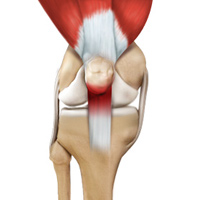
What is Patellar Tendonitis?
Patellar tendonitis, also known as "jumper's knee", is an inflammation of the patellar tendon that connects your kneecap (patella) to your shinbone. This tendon helps in extension of the lower leg.
What are the Causes of Patellar Tendonitis?
Patellar tendonitis usually results from repetitive trauma or overuse, particularly from sports activities involving jumping such as basketball or volleyball. Therefore, this condition is also known as jumper’s knee. Rarely, this condition may also occur because of an acute injury to the tendon that has not healed properly.
What are the Symptoms of Patellar Tendonitis?
Pain over the patellar tendon is the first symptom of patellar tendinitis. You may also have pain during activities, especially jumping or kneeling. Rarely, swelling around the tendon may be seen.
How is Patellar Tendonitis Diagnosed?
Your doctor will evaluate your condition based on your symptoms and physical examination. X-ray of the knee may be taken to make sure there is no problem involving the bones or bone spurs around the knee. An MRI scan can reveal degenerative changes in the patellar tendon.
What is the Treatment for Patellar Tendonitis?
Conservative Treatment
Conservative treatment options for patellar tendinitis include:
- Rest the injured knee and avoid activities such as running and jumping that worsen the condition
- Non-steroidal anti-inflammatory medications (NSAIDs) may be prescribed to provide relief from pain and swelling associated with patellar tendinitis
- Stretching out before exercising is important to prevent recurrence of patellar tendinitis. These exercises can also help strengthen the patellar tendon and nearby muscles such as the quadriceps, hamstrings, and calf muscles
- Application of ice to the affected area helps to control the inflammation and reduce the swelling
- A knee support or strap (called an intrapatellar strap or a Chopat strap) can be worn to relieve pain by directing the force away from your tendon and into the strap
- Iontophoresis: In this technique, topical corticosteroid medication is applied to the affected area with the help of a small device that uses an electric charge to deliver the medication through your skin
- Corticosteroid injection: With the guidance of an ultrasound, corticosteroid injection may be given directly into the sheath around the affected patellar tendon. This helps to relieve pain and perform strength exercises without any pain
Surgical Treatment
In rare cases such as when there is persistent pain, despite the other treatment options, surgery may be considered. Surgery involves the removal of severely damaged parts of your tendon and repair of any tears in the tendon.
For more information about our services or to schedule an appointment, call us at / / or cliAppointmentck here to request an appointment online. We’ll respond to you as soon as possible.