What is a Medial Patellofemoral Ligament Injury?
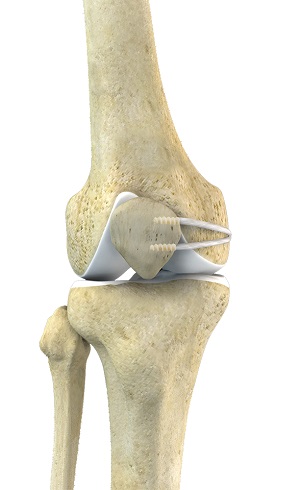
The medial patellofemoral ligament (MPFL) is a ligament that joins the kneecap (patella) to the thighbone (femur). Ligaments are fibrous connective tissue that attach bones to other bones. The MPFLis attached to the inside of the patella and helps stabilize it and position it in a groove at the lower end of the femur called the trochlea. Trauma or a blow to the knee may cause a tear in the ligament.
What are the Causes of Medial Patellofemoral Ligament Injury?
An MPFL injury may occur due to knee injuries causing patellar dislocation or forceful twisting. This can occur due to:
- Sports injuries
- Automobile accidents
- Falls from a height
- A blow to the knee
What are the Symptoms of Medial Patellofemoral Ligament Injury?
Symptoms of a medial patellofemoral ligament injury include:
- Knee stiffness
- Swelling
- Pain
- Tenderness
- Knee instability
- Shifting of the patella
- Catching sensation on bending and straightening the knee
- Difficulty walking
- Cracking or crunching sound
- Restricted range of motion
- Discoloration near the injured area
- Bruising
How is Medial Patellofemoral Ligament Injury Diagnosed?
Your doctor will review your medical history and perform a physical examination where the knee and patella are assessed for range of motion, strength, and stability. Your doctor may also recommend imaging tests such as X-rays, CT scans, or an MRI scan to visualize the ligament injury and any damage to other structures.
What is the Treatment for Medial Patellofemoral Ligament Tears?
Treatment measures for medial patellofemoral ligament tears include:
Conservative methods
- RICE Method: Your doctor will recommend rest, ice application, compression, and elevation of the affected knee to reduce inflammation and pain.
- Physical therapy: You will be instructed to carry out physical exercises to strengthen the knee muscles and improve flexibility
- Medications: Non-steroidal anti-inflammatory drugs and analgesics are recommended to treat pain and swelling.
- Knee brace: A brace maybe work to help support the knee.
- Special Footwear: This can help control your gait while walking or running and decrease the pressure on the kneecap.
If conservative methods failed to improve the symptoms, surgery will be recommended and may include:
- Medial patellofemoral ligament reconstruction: The torn MPF ligament is removed and reconstructed using a graft that is harvested from the hamstring tendons are fixed to the patella tendon using screws. The grafts are either taken from your own body (autograft) or a donor (allograft).
- Tibial tubercle osteotomy: Changing the insertion point of the patellar tendon to improve patellar alignment.
- Lateral release: The tight lateral ligaments of the kneecap are released to correct the patella position.
- Trochleoplasty: Reshaping the groove or trochlea at the lower end of the femur helps with positioning and smooth movement of the patella.
For more information about our services or to schedule an appointment, call us at / / or cliAppointmentck here to request an appointment online. We’ll respond to you as soon as possible.