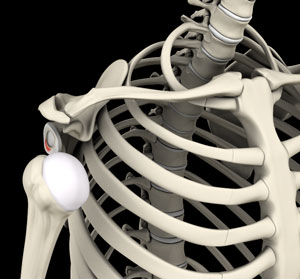
What is Shoulder Instability?
Shoulder instability is a chronic condition that causes frequent dislocation of the shoulder joint.
What are the Causes of Shoulder Instability?
A dislocation occurs when the end of the humerus (ball portion) partially or completely dislocates from the glenoid (socket portion) of the shoulder. A partial dislocation is referred to as a subluxation whereas a complete separation is referred to as a dislocation.
What are the Risk Factors of Shoulder Instability?
The risk factors that increase the chances of developing shoulder instability include:
- Injury or trauma to the shoulder
- Falling on an outstretched hand
- Repetitive overhead sports such as baseball, swimming, volleyball or weightlifting
- Loose shoulder ligaments or an enlarged capsule
What are the Symptoms of Shoulder Instability?
The common symptoms of shoulder instability include pain with certain movements of the shoulder, popping or grinding sound that may be heard or felt, swelling and bruising of the shoulder seen immediately following subluxation or dislocation.
Visible deformity and loss of function of the shoulder occur after subluxation or sensation changes such as numbness. Partial paralysis can occur below the dislocation because of pressure on nerves and blood vessels.
What are the Treatment Options for Shoulder Instability?
Conservative Treatments for Shoulder Instability
The goal of conservative treatment for shoulder instability is to restore stability, strength and a full range of motion. Conservative treatment measures may include the following:
Closed reduction: Following a dislocation, your surgeon can often manipulate the shoulder joint, usually under anesthesia, realigning it into proper position. Surgery may be necessary to restore normal function depending on your condition.
- Medications: Over-the-counter pain medications and NSAIDs can help reduce the pain and swelling. Steroidal injections may also be administered to decrease swelling.
- Rest: Rest the injured shoulder and avoid activities that require overhead motion. A sling may be worn for 2 weeks to facilitate healing.
- Ice: Ice packs should be applied to the affected area for 20 minutes every hour.
Surgery for Shoulder Instability
When conservative treatment options fail to relieve shoulder instability, your surgeon may recommend shoulder stabilization surgery. Shoulder stabilization surgery is performed to improve the stability and function of the shoulder joint and prevent recurrent dislocations. It can be performed arthroscopically, depending on your condition, with much smaller incisions.
Arthroscopy is a surgical procedure in which an arthroscope, a small flexible tube with a light and video camera at the end, is inserted into a joint to evaluate and treat the condition.
The benefits of arthroscopy compared to the alternative, open shoulder surgery, are smaller incisions, minimal soft tissue trauma, less pain leading to faster recovery.
For more information about our services or to schedule an appointment, call us at / / or cliAppointmentck here to request an appointment online. We’ll respond to you as soon as possible.