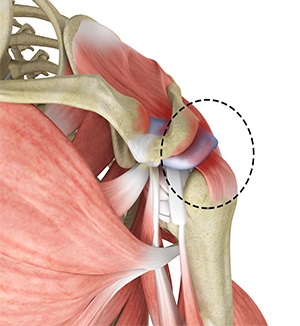
What is Anatomy of the Rotator Cuff?
The rotator cuff consists of a group of tendons and muscles that surround and stabilize the shoulder joint. These tendons allow a wide range of movement of the shoulder joint across multiple planes. Irritation or injury to these tendons can result in rotator cuff pain.
What Causes Rotator Cuff Pain?
Rotator cuff pain may be caused due to:
- Age-related wear and tear of the rotator cuff tendons in the shoulder
- Repeated overhead arm movements as performed during manual labor
- Sports activities such as pitching during baseball or playing racquet sports
- Trauma such as accidents, direct blows to the shoulder, or falling on the shoulder
What are the Symptoms of Rotator Cuff Pain?
The symptoms that often accompany rotator cuff pain include:
- A weakness of the shoulder
- Restricted range of motion
What Factors Exacerbate Rotator Cuff Pain?
Shoulder pain may be exacerbated by:
- Overhead movements
- Reaching behind the back
- Lifting objects
- Lying on the injured shoulder during sleep
How is Rotator Cuff Pain Diagnosed?
Your doctor will make a diagnosis based on:
- History of symptoms
- Medical history
- Physical exam
- X-rays to identify any bony abnormalities that might be irritating the rotator cuff
- MRIs or ultrasounds, which produce better images of the rotator cuff tendons
What is the Treatment for Rotator Cuff Pain?
Initial treatment involves the use of conservative methods such as rest, non-steroidal medications, physical therapy, and steroid injections.
If the rotator cuff pain is not resolved by conservative methods, surgery may be required. The goal of surgery is to
- Remove any bony structures or tissue that may be impinging the rotator cuff tendons during movement and causing pain
- Repair/reattach a torn rotator cuff tendon
This can be done arthroscopically (keyhole surgery) or through open surgery.
Following surgery, your arm will be placed in a sling to allow the shoulder time to heal without any stress being placed on it. Once sufficiently healed, physical therapy rehabilitation may be recommended by your doctor to regain strength and range-of-motion.
How Can Rotator Cuff Pain Be Prevented?
Rotator cuff pain can be prevented by taking the following precautions:
- Perform regular stretching and strengthening exercises for your shoulder.
- Maintain good posture while sitting, standing or walking (avoid hunching).
- Take breaks while performing repetitive overhead activities.
- When lifting objects, keep them close to your body.
- Switch sides often when carrying a heavy bag.
- Don’t sleep on the same side every night.
For more information about our services or to schedule an appointment, call us at / / or cliAppointmentck here to request an appointment online. We’ll respond to you as soon as possible.