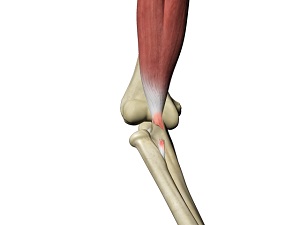
What are Distal Biceps Injuries?
The biceps is a large muscle present in front of the upper arm, extending from the shoulder joint to the elbow. The lower end of the biceps muscle called the distal biceps forms a tendon which attaches to the upper part of the radius in the elbow. Injuries to this tendon are called distal biceps injuries.
What are the Causes of Distal Biceps Injuries?
Distal biceps injuries commonly occur in middle-aged adults, especially in the dominant arm. The injury can lead to a partial or complete rupture of the biceps tendon. A rupture usually occurs when there is sudden loading of the biceps tendon that rapidly straightens the elbow, while the biceps is contracting. This can happen when a person tries to catch a heavy object unexpectedly or when falling on an outstretched arm. Tendons that are weak or those that have pre-existing disease or damage are highly susceptible to rupture. This vulnerability is increased in people who smoke or those who are physically less active.
What are the Symptoms of Distal Biceps Injuries?
Signs and symptoms of distal biceps injuries include:
- Bruising and swelling around the front of the elbow
- Pain in the front of the elbow
- Arm weakness and difficulty flexing and rotating the arm
- Sensation of a tear or pop at the time of the injury
- Biceps deformity due to retraction of the tendon in cases of a complete rupture
How are Distal Biceps Injuries Diagnosed?
Your doctor will review your symptoms and medical history and perform a physical examination during which range of motion and strength of the joint is assessed. Certain tests are ordered such as an X-ray, MRI, CT scan, or ultrasound for a detailed evaluation of the injuries.
What is the Treatment for Distal Biceps Injuries?
Distal biceps injuries are mostly treated by surgery, but nonsurgical treatments may be recommended depending on your injury, activity level, and whether or not you are a good surgical candidate.
Non-surgical treatment methods
- Resting the joint
- Application of an ice pack at regular intervals to reduce pain and swelling
- Use of anti-inflammatory medications
- Physical therapy to improve range of motion and strength once symptoms are under control
Surgical treatment methods
Surgical treatment involves reattaching the distal biceps tendon to the radius with the help of sutures, screws, or other anchoring devices. For this procedure, your surgeon makes a single incision in front of the elbow or two incisions, one in the back and the other in front of the elbow.
Delay of surgery should be avoided as a chronic tear can develop scar tissue and muscle atrophy and is difficult to repair. A tendon graft may be used to repair a chronic tendon rupture.
Following surgery, your arm will be immobilized for a few weeks to allow healing, and physical therapy is recommended for rehabilitation. It usually takes 4-5 months to return to full activity.
For more information about our services or to schedule an appointment, call us at / / or cliAppointmentck here to request an appointment online. We’ll respond to you as soon as possible.